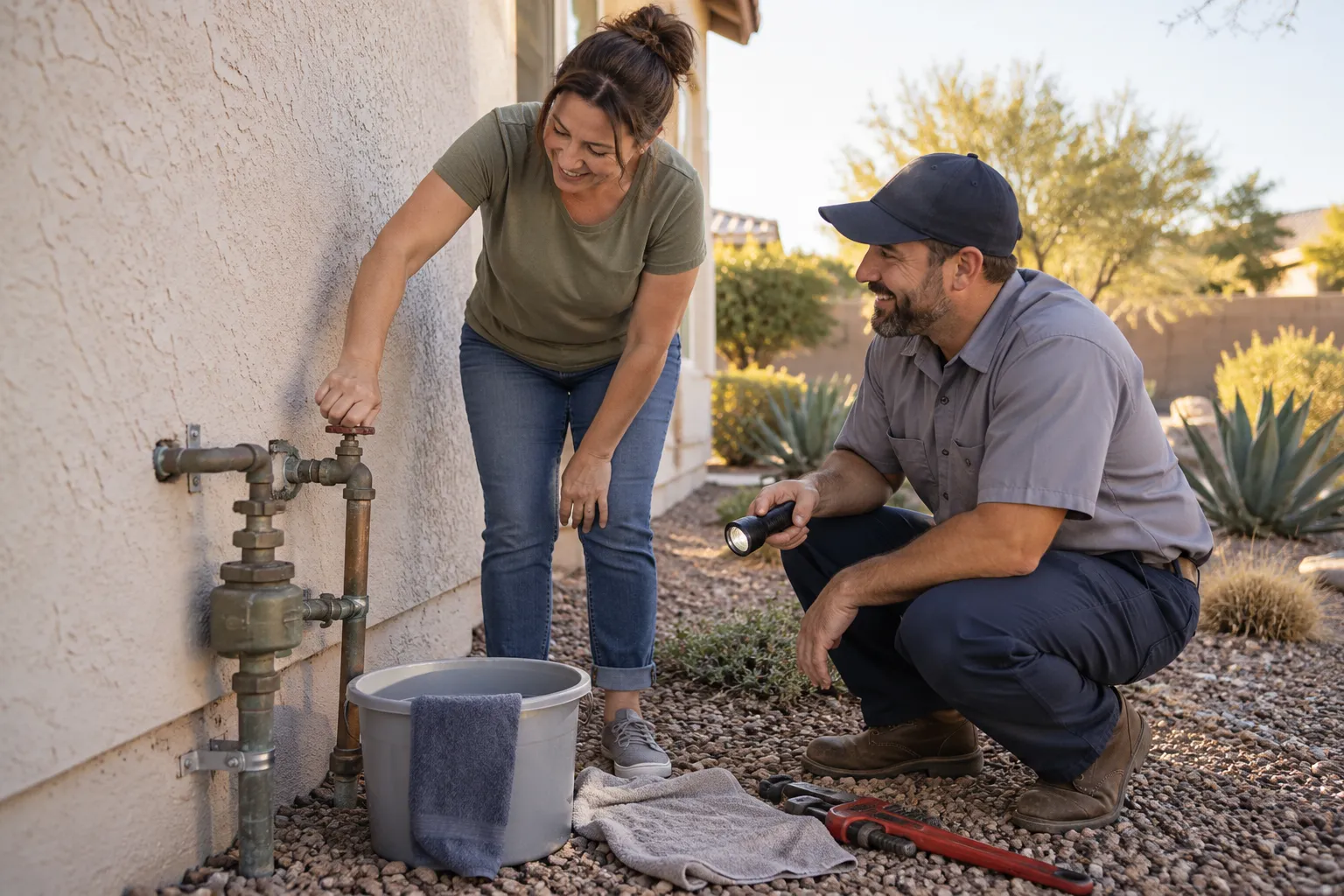
Emergency Plumbing
Shut the water off, take a few photos, then get a local provider lined up to fix it.
Emergency plumbing and drain help in Loomis
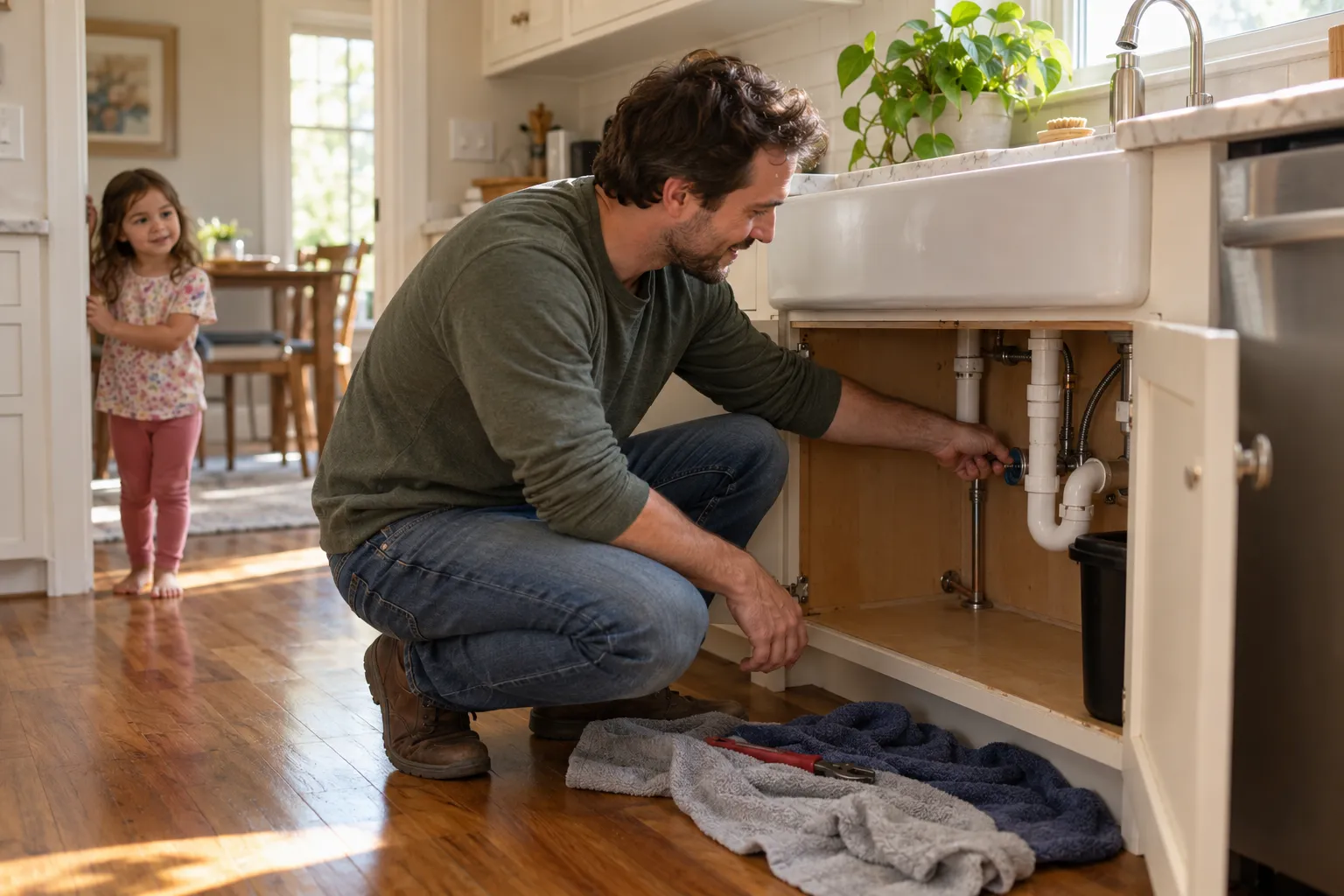
Burst pipe, slow drain or sewage smell? Shut off what you can, take a few photos, and request an estimate. We connect you with an independent local provider in our network.
A pipe lets go under the sink. The toilet gurgles. The shower drain fills with gray water while the kids are getting ready for school. Plumbing problems never pick a quiet moment.
Take a breath, then take action. Shut off the water at the valve. Stop running sinks, showers and the washing machine. Snap a few photos. That takes about two minutes, and it will help you later.
Chartbin Plumbing is a referral service. We do not send anyone out ourselves. We connect homeowners in Loomis and the Loomis area with independent local providers who handle emergency plumbing and drain cleaning. You describe what is going on, and a provider in our network follows up to talk through the job.
Would you rather talk to a person? Request a callback to check provider availability for your street. Hours and response times differ from one provider to the next, so ask about timing when you connect.
This page walks through what you can safely do yourself, where to stop, and how to keep a plumbing problem from taking over your whole week.
Chartbin Plumbing is a matchmaker, not a plumber. You send a request. We route it to a local provider in our network. The provider talks with you, looks at the problem, and gives you a written quote before work starts. The provider does the work and sets the price. We do not.
When water is on the floor, nobody wants to scroll through dozens of listings with a mop in one hand. One request does the legwork. You stay with the kids, the dinner and the shut-off valve.
Providers quote faster when they know what they are walking into. Keep a short note on your phone. Write the time it started, what you shut off, and what the pipes or drains have been doing. Add photos of the leak, the stain, or the standing water. These notes also help if you talk with your insurer later. Some policies may cover sudden damage, so check your policy.
Homes around Loomis and across the Loomis area come in all shapes. Many are stucco ranch houses sitting on slabs or raised foundations. Plenty are older bungalows. A lot are tract homes built between the 1950s and the 1980s, and their pipes are now showing their age.
That mix matters. A slab home hides its supply lines under concrete, so a hidden leak may show up as a warm patch on the floor or a water bill that jumps. An older bungalow may have aging drain lines that catch roots and grease. A tract home may have a mix of original and patched pipe from decades of repairs.
Weather plays a part too. Long dry seasons can shift soil and send tree roots hunting for moisture in your sewer line. Then a winter rain event arrives, and a partly blocked line suddenly cannot keep up. Near the coast, mild temperatures mean fewer frozen pipes, but corrosion and aging fittings still cause trouble.
Providers in our network know these local patterns. Availability depends on the provider and your street, so it pays to ask early.
Not sure whether your address is covered? Send the form anyway. We will tell you plainly if we cannot find a provider near you.
Do this on a calm evening, not during a leak. Walk the outside of the house and look near the front wall, the garage, or a side yard for the main water valve. Turn the handle once to make sure it moves. A stuck valve is no help at the worst moment. Put a small tag on it so everyone in the house can find it.
Kids, teens and guests should know two things: where the shut-off is, and who to tell. Stick a note on the inside of a cabinet door. It takes one minute to write and can save a lot of water.
Toilets and sinks have small stop valves under or behind them. Turn them clockwise to stop the flow to just that fixture. That can end a small leak without shutting down the whole house, which is a big help when people are mid-shower or mid-dishes.
A damp cabinet floor, a faint hiss in a wall, a slow drain that gets slower, or a gurgle in the tub when the washer drains. These are small hints. Check them early and photograph what you see.
They can harm old pipes and are risky if a provider later opens the line. A plunger or a hand drain snake on a simple sink clog is a fair first try. If water backs up in more than one drain, stop. That points to the main line, and it needs a provider.
After a long dry stretch, roots go looking for water. When the first big rain arrives, a half-blocked line can fail fast. If you have big trees near the sewer path, consider asking a provider about a camera inspection before winter.
A folder on your phone works. Save photos of past repairs, receipts, quotes, and the age of your water heater. Note which pipes are copper, galvanized or plastic if you know. Paperwork-ready homes get faster, clearer estimates.
Tell the provider about school runs, work calls and nap times. Many providers can respond quickly, and some can plan visits around your schedule. Ask about timing, how long water may be off, and whether any part of the job can wait until a quieter day.
Sewage, a burst line, a smell of gas, or water near electrical outlets is not a DIY job. Step back, keep everyone clear, and get a provider involved.
Tell us what is leaking, backing up or gurgling. A few photos and a short note are plenty. We will point you toward an independent local provider in our network, and you decide what happens next.
If you want to talk first, request a callback to check provider availability. You can also email contact@chartbin.living and we will reply with next steps.
Tell us what is leaking, backing up or gurgling. Send the request form, or email contact@chartbin.living, and we will point you to a local provider in our network.
No obligationClose the fixture valve or the main valve, and switch off the water heater if it is leaking.
Take wide and close photos, write down the time, and keep any damaged items for later.
Send your details and photos, and say when your household is easiest to reach.
Compare written estimates, confirm the plan with the provider and book a window that fits.
Shut off the main water valve. Turn off the water heater if it is safe to reach. Open a faucet to drain pressure, move valuables, and take photos. Keep clear of outlets and wet electrical items. Then request an estimate so a provider can check the damage.
Often, yes, for a single sink or tub. Try a plunger or a hand snake. Skip harsh chemicals. If several drains back up, water rises in a toilet, or you smell sewage, stop and ask a provider about the main line.
Warning signs include gurgling toilets, backups in more than one drain, wet spots in the yard, and repeating clogs. A provider can run a camera through the line, show you what is wrong, and explain the options in a written quote.
It varies by job. Typical U.S. ranges run from about one hundred fifty dollars for a simple drain clearing to several thousand for major pipe or sewer work. Rush timing can add to the price. Always ask for a written quote before work starts.
Some policies may cover sudden damage, but wear, neglect and slow leaks are often excluded. Check your policy. Providers can often help document damage for a claim, so take photos and keep your quote and receipts.
Most calls to providers fall into two buckets. One is a pipe or fixture that is leaking, burst or failing right now. The other is a drain that is slow, blocked or backing up. Pick the card below that sounds like your day, and read the quick steps first.
Shut the water off, take a few photos, then get a local provider lined up to fix it.
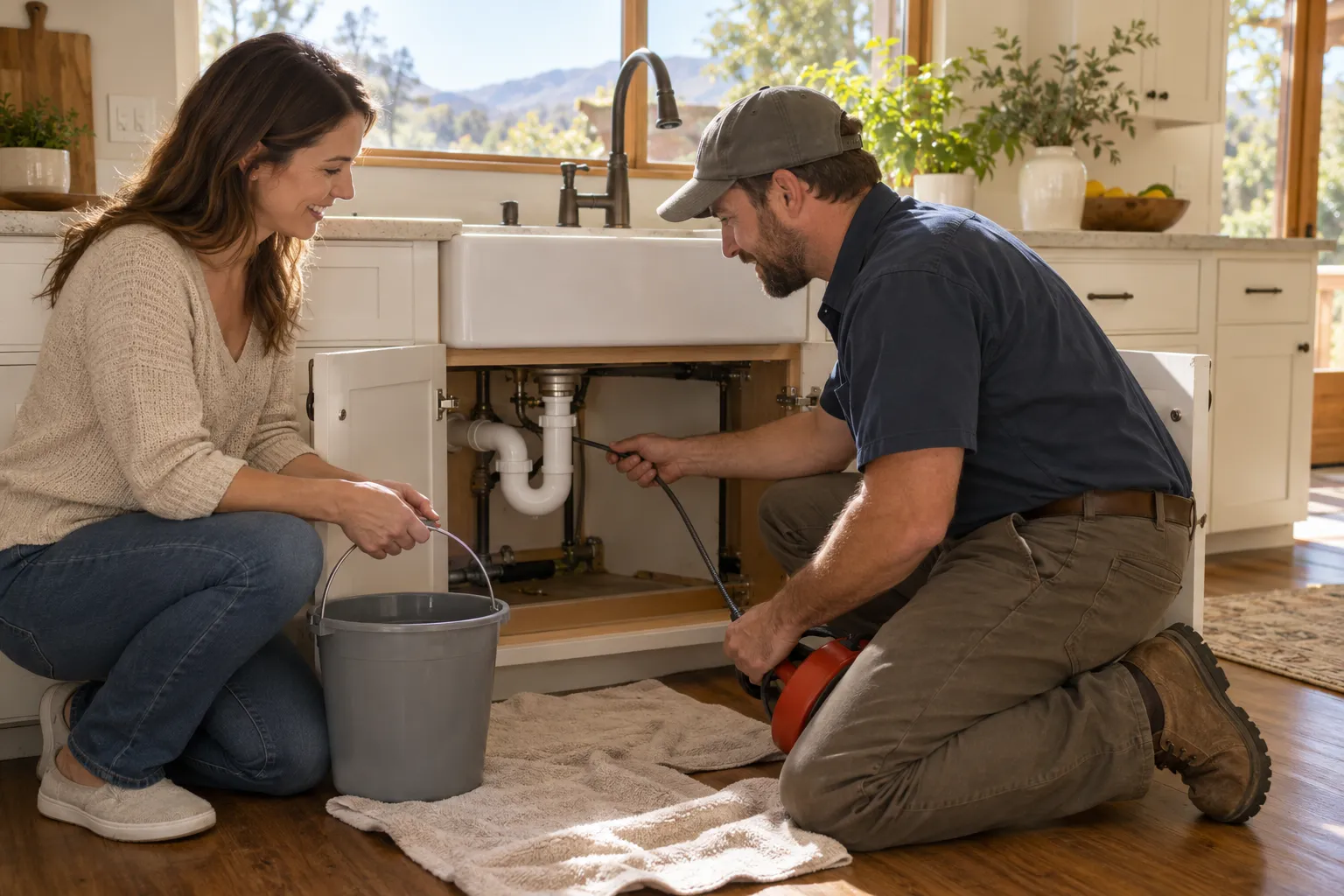
Clogged drain? Learn what to check, what to try safely, and when to hand it to a local provider.
Tell us what is leaking, backing up or gurgling. Send the request form, or email contact@chartbin.living, and we will point you to a local provider in our network.
No obligation